In global public discourse, few legal sagas have generated as much disinformation, conspiracy theories, and fragmented sensationalism as the criminal syndicate surrounding Jeffrey Epstein. The root cause of this confusion is the steep structural barrier to primary sources: thousands of pages of declassified records released by the Federal Bureau of Investigation (FBI), federal court proceedings from the Southern District of New York (SDNY), and sworn depositions written in technical legal English, dense with redactions, Freedom of Information Act (FOIA) exemption codes, and non-linear Bates stamps.
To eliminate this information gap and grant Italian researchers, journalists, and citizens direct, unbiased access to primary evidence, we launched epstein.hidaba.com: an autonomous, open-access digital archive providing full, unabridged Italian translations of the official declassified dossier, reinforced by cryptographic SHA integrity proofs, original Bates numbering cross-references, and zero-latency client-side full-text search.
⚡ Key Document Repository Metrics
🛑 Beyond Media Noise and “Cherry-Picking”
Since Epstein’s federal indictment in July 2019 and subsequent controversial death inside the Metropolitan Correctional Center in New York, the public sphere has been inundated with endless editorial leaks, out-of-context quotes, and unverified social media narratives. Conventional reporting frequently suffers from two systemic flaws:
- Selective Reporting (“Cherry-Picking”): Media outlets often isolate individual names from passenger manifests (flight logs) or deposition transcripts without explaining the crucial legal context in which they appear (unverified third-party claims, routine contacts, aircrew staff, or peripheral mentions during formal questioning).
- The Language and Regulatory Barrier: The raw files are saturated with U.S. federal procedural forms (FD-302 witness reports, Grand Jury subpoenas, search warrant inventories, and inter-agency memos). For non-native English speakers or those unfamiliar with the American common-law adversarial system, studying these documents directly was historically prohibitive.
epstein.hidaba.com eliminates intermediaries: each page is transcribed, structured, and translated with meticulous philological fidelity, enabling anyone to directly evaluate official witness testimony, flight paths, police notes, and federal findings.
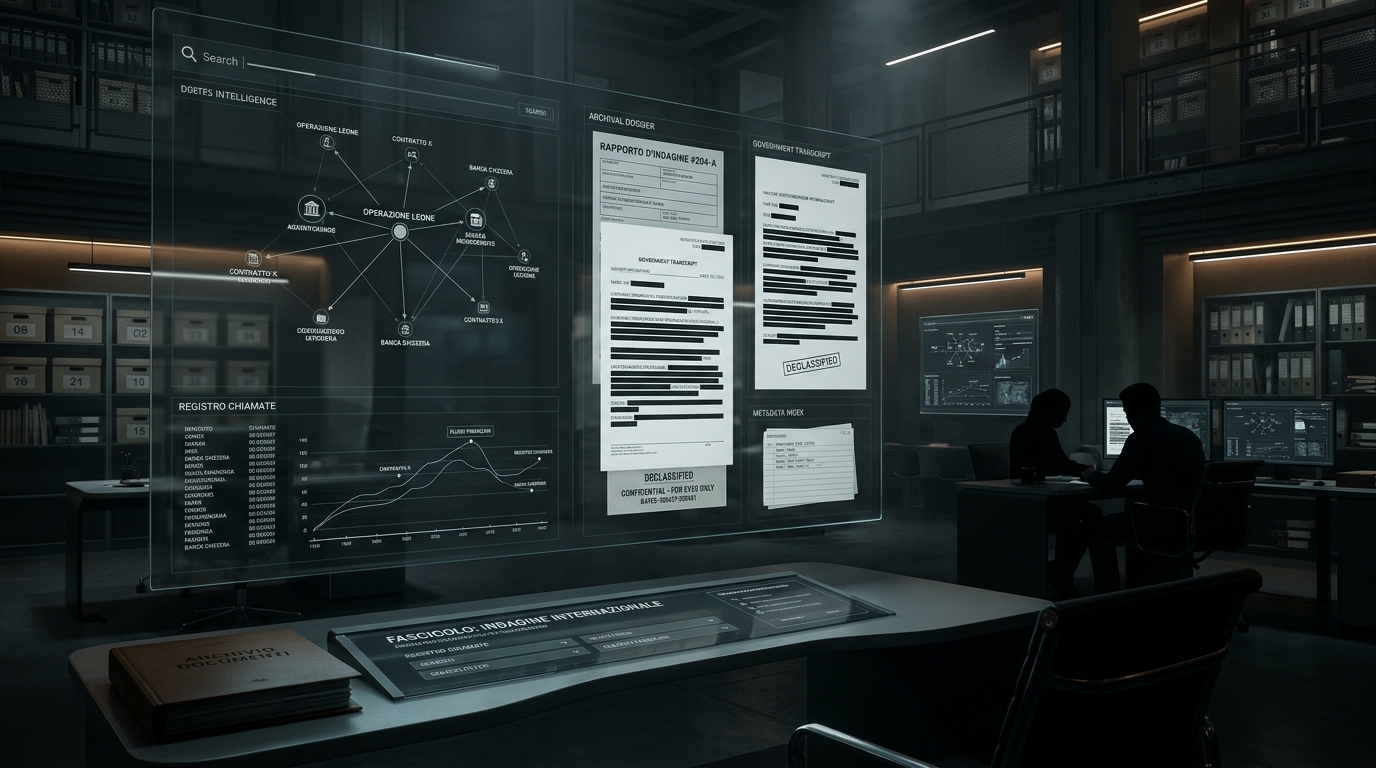
📚 Repository Anatomy: The Three Core Collections
The catalog is systematically divided into three distinct legal corpora:
1. Jeffrey Epstein – FBI Vault (22 Volumes · 1,426 Pages)
Documents released directly through the FBI’s FOIA electronic reading room (The Vault). This collection contains:
- Early Police Reports (Palm Beach Police Department, 2005–2007): Investigative interview transcripts conducted by Detective Joseph Recarey’s team with early victims, documenting the operational patterns and recruitment methods at the El Brillo Way estate.
- Miami & New York FBI Field Office Files: Internal teletypes, inter-office coordination, federal warrant filings, and correspondence with the U.S. Attorney’s Office for the Southern District of Florida (USAO).
- Flight Logs & Aircrew Declarations: Historical flight manifests and formal interviews with pilots (including Dave Rodgers and Larry Visoski) concerning private aircraft operations, including the Boeing 727 known colloquially in the press as the Lolita Express.
- Financial Subpoenas & Transaction Logs: Bank records, escrow summaries, and corporate entity filings across connected offshore trusts.
2. Investigative Files Review (13 Volumes · 991 Pages)
The internal retrospective audits (Investigative Files Review) conducted by Department of Justice inspectors and federal oversight authorities. Essential for analyzing:
- The development and execution of the controversial 2007–2008 Non-Prosecution Agreement (NPA) negotiated under former U.S. Attorney Alexander Acosta, which granted federal immunity to Epstein and unindicted co-conspirators.
- Internal inquiries regarding compliance with the Crime Victims’ Rights Act (CVRA) and failures in victim notification protocols.
- Supervisory review memoranda and legal evaluations of evidence gathered across various jurisdictions over a fifteen-year timeframe.
3. Court Records & Virginia Giuffre Case (2 Volumes · 157 Pages + Gallery)
Unsealed filings and trial evidence arising from the landmark defamation action brought by Virginia Giuffre (née Roberts) against Ghislaine Maxwell in 2015 in the U.S. District Court for the Southern District of New York (Giuffre v. Maxwell, 15-cv-07433):
- Sworn witness depositions and examination transcripts.
- Procedural motions, counter-claims, and judicial orders unsealed for public inspection.
- Photographic Evidence Gallery: Seven original high-resolution photographic exhibits from volume
FBI-VG-02, documenting architectural exteriors, room layouts, and evidentiary items cataloged with their exact Bates identifiers (e.g., FBI 25-cv-2191-Pre-41).
🔬 Scientific Methodology and Legal Neutrality
Presumption of Innocence and Legal Neutrality:
As emphasized in the archive’s disclaimer, the appearance or mention of any individual’s name within these investigative records does not establish nor imply criminal wrongdoing or legal liability. The files routinely cite victims, third-party witnesses, attorneys, aviation staff, service contractors, law enforcement personnel, and individuals named tangentially during interviews.
Core Translation & Transcription Principles
- Preservation of Redactions & FOIA Codes: No censored text has been guessed, extrapolated, or rewritten. Where the U.S. government redacted content with black privacy blocks, the translation strictly records the standardized four-asterisk mark (
****), preserving FOIA statutory grounds (e.g.,(b)(6)for personal privacy and(b)(7)(C)for law enforcement sensitive sources). - Dual-Reference Bates Indexing: Every section maps both the PDF Page Number and the Printed Bates Stamp. Readers and legal practitioners can cross-examine any Italian paragraph against the corresponding U.S. federal PDF page in seconds.
- Legal Precision: American common-law procedural terms—such as Subpoena, Grand Jury, Indictment, Affidavit, and Deposition—are rendered using accurate jurisdictional framing, avoiding Italian legal false friends.
💻 Technical Architecture: Performance, Privacy & Data Sovereignty
Built on the same privacy-first and ultra-responsive engineering tenets behind the Hidaba ecosystem:
- Static Generation & Immutability: Built using the high-performance Zensical static engine, transforming tens of thousands of lines of documentation into lightweight HTML. With no dynamic database layer, the site has zero attack surface, minimal bandwidth footprint, and near-instant load speeds even on mobile data connections.
- Client-Side Full-Text Search (Zero Server Logging): Search operates entirely within the user’s browser using asynchronous Web Workers. Query terms are never transmitted to external servers, protecting reader privacy and letting users query names or locations in under 50 milliseconds.
- Cryptographic Verification via SHA Hashes: To guarantee data integrity against retrospective manipulation, the site provides public audit manifests:
manifest_archivio.json(for all 37 original U.S. government FBI PDFs) andverifica_sorgenti.json(for all 50 Markdown source translations and gallery assets).
🧭 Navigating the Repository on epstein.hidaba.com
To explore the 2,500+ pages of the dossier on epstein.hidaba.com:
- Volume Catalog: The complete index of all 37 folders (
FBI-EP-01toFBI-EP-22,FBI-RI-01to13, andFBI-VG-01/02) with page counts and direct reading links. - Evidence Gallery: High-resolution photographic exhibits unsealed in court records, complete with Bates reference metadata.
- Reading Methodology: Guidelines for decoding government redaction brackets, FOIA exemptions, and abbreviations.
- Source Provenance: Downloadable SHA-256 JSON manifests for auditing translation fidelity and source integrity.
🎯 Conclusion: The Democratic Imperative of Primary Sources
In an information ecosystem crowded with algorithmic sensationalism and partisan soundbites, the true purpose of independent investigative technology is straightforward: to make raw facts and primary documents accessible, readable, and verifiable.
The epstein.hidaba.com project offers researchers, investigative reporters, legal scholars, and readers a rigorous, unfiltered, and comprehensive public resource in Italian.
The archive is publicly accessible at epstein.hidaba.com. Zero registration required, zero tracking cookies.